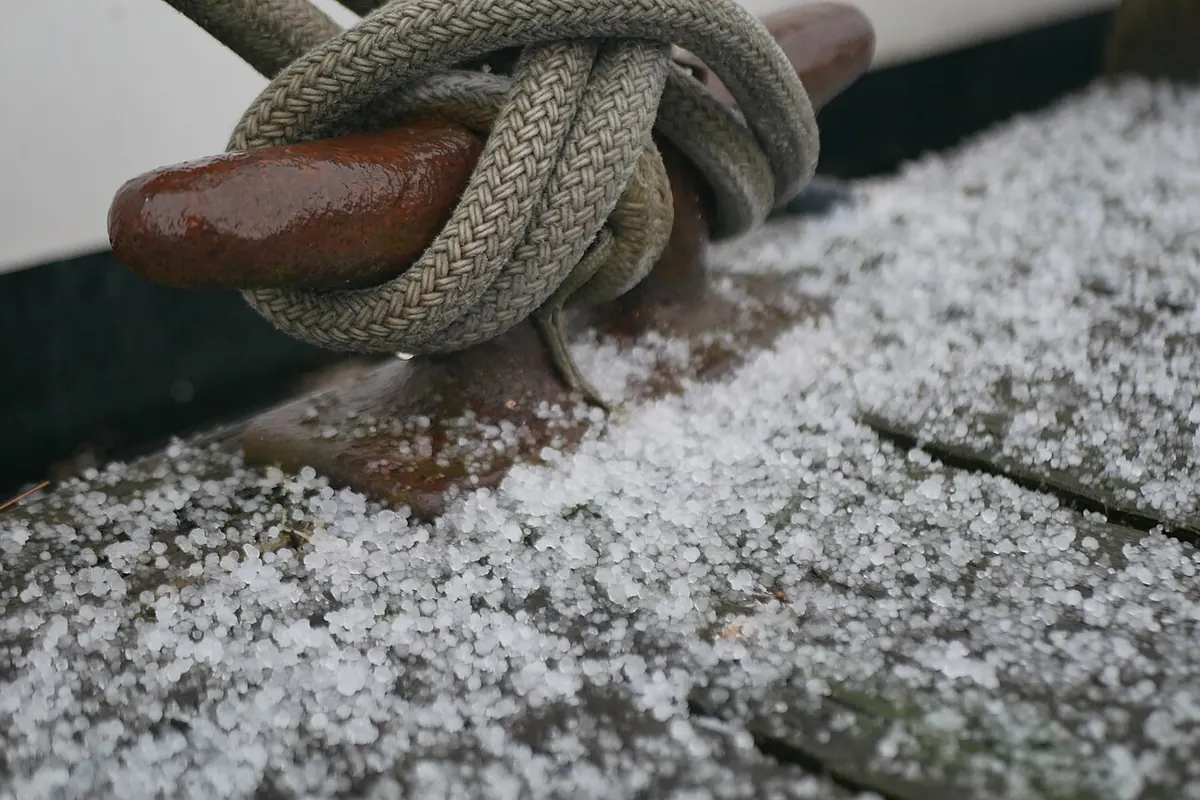
Hail in New Mexico
Hail falls across the state, but the eastern plains and the Albuquerque metro see more than their share. Storms that build off the Sandias and Manzanos can drop stones across Rio Rancho, the Northeast Heights and the East Mountains, and the open country around Clovis, Roswell and Hobbs gets regular spring and summer hail. Roofs in this climate already age fast under intense ultraviolet light, which is part of why carriers and owners argue about what a hailstorm caused versus what time did.
Pitched shingle roofs
Newer subdivisions throughout the state use asphalt composition shingles. Hail damage on shingles shows as bruising, granule loss and fractured mats, and the disputes usually turn on how many hits per test square count as functional damage, whether the shingles can be repaired, and whether a discontinued product can be matched.
Concrete and clay tile
Tile roofs in Las Cruces, Santa Fe and upscale Albuquerque neighborhoods crack under larger hail. Replacement tiles may not match in color or profile, and walking a tile roof to inspect it can break more tiles. We document carefully and price the underlayment, flashing and tile replacement that the actual repair requires.
What a roof-only estimate tends to miss
- Evaporative coolers. Swamp coolers sit on many New Mexico roofs. Hail dents cabinets, splits pads and damages ductwork and roof jacks.
- Skylights. Acrylic domes craze and crack; replacing them often disturbs surrounding roofing and flashing.
- Stucco walls. Large hail chips and spalls stucco, especially on windward elevations. Matching texture and color across a whole wall is a frequent dispute.
- Gutters, canales and vents. Soft metals dent even when shingles look fine.
- Windows and screens. Torn screens and cracked vinyl frames are easy to overlook.
- Solar panels and mounts. Removal and reset is a real cost on any roof replacement.
How we approach a hail appraisal
- Confirm the date of loss and look at storm data for your location, since hail claims often start with a question about which storm caused what.
- Inspect every slope, mark and photograph test areas, and note collateral damage on soft metals.
- Measure the roof and record pitch, layers, drip edge, valleys and penetrations.
- Price the repair or replacement with local costs, including code items, cooler and skylight work, and any required stucco refinishing.
Remember that appraisal settles the amount of loss. If the carrier says the damage is cosmetic and excluded under a specific endorsement, that may be a coverage issue rather than one for the panel.
Why an independent eye helps
A New Mexico hail damage appraisal is only as good as the inspection behind it. Test squares drawn on one slope do not describe a roof with four exposures, and a cooler that looks fine from the street may have a cracked pan once the cover comes off. We take the time to look, then let the measurements and photos carry the argument.
Deductibles and depreciation
Some New Mexico policies carry a separate wind and hail deductible stated as a percentage of the dwelling limit. Others use actual cash value roof schedules that depreciate older roofs heavily. Use the percentage deductible converter to see what your deductible is in dollars, and visit our wind damage appraisal page if the same storm brought damaging gusts.
Questions about hail & roof appraisal
How soon should I report hail damage?
Promptly. Many policies require prompt notice and some set a deadline for roof claims, so check your policy and report as soon as you notice damage.
Is a dented swamp cooler part of the claim?
Usually it is part of the dwelling if attached to the house, but your policy’s wording controls. It belongs in the estimate either way so the panel can value it.
Can appraisal decide if damage is just cosmetic?
The panel values physical damage. Whether a cosmetic-damage exclusion applies is a coverage question that may need a New Mexico attorney.